
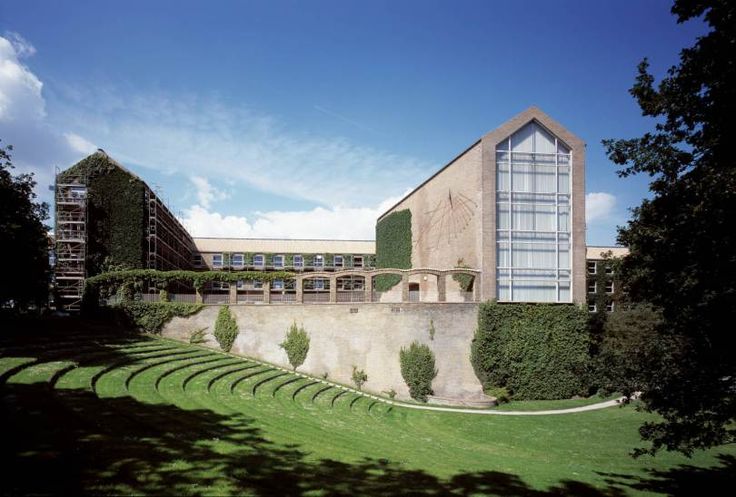
Aarhus University
[vc_row][vc_column][vc_column_text css=””]Aarhus University is a public research university located in Denmark, Established in 1928, and the second-largest university with over 38,000 students enrolled across its various schools and faculties, including business, health, humanities, natural sciences, and social sciences. The university is ranked among the top 100 universities in the world by major global rankings such as the QS World University Rankings and the Times Higher Education World University Rankings, It is particularly known for its strengths in fields like business, economics, medicine, natural sciences, and technology. For example, its business school, Aarhus BSS, is among the top business schools in Europe.
The university was established as a center of higher education and research in the Jutland region, complementing the more centralized focus of the University of Copenhagen.
Over its nearly 100-year history, Aarhus University has played a significant role in the intellectual and cultural development of Denmark. It has a strong tradition of academic freedom and independence, which has contributed to its reputation as a bastion of critical thinking and progressive ideas

Research
Aarhus University is a major research institution, conducting cutting-edge work in areas like renewable energy, nanotechnology, medical sciences, and digital technologies. It has many specialized research centers and institutes that focus on topics like climate change, robotics, and public health. The university works closely with industry partners and has a strong track record of commercializing its research through startups and licensing deals.
It is home to several large-scale research infrastructures and facilities, including advanced laboratories and supercomputing resources.
Research Strengths
Aarhus University is recognized for its strengths in several key research are
Natural Sciences (e.g. physics, chemistry, biology, geosciences)
Health and Medical Sciences (e.g. medicine, public health, nursing)
Technology and Engineering (e.g. computer science, nanotechnology, renewable energy)
Business and Economics
Humanities and Social Sciences (e.g. history, philosophy, psychology, sociology)
The university has established some specialized research centers and institutes to drive innovation and tackle complex challenges in these domains.
Research Infrastructure
Aarhus University operates state-of-the-art research facilities and laboratories equipped with cutting-edge instrumentation and technology. This includes advanced computing resources, such as high-performance computing clusters and data centers, to support data-intensive research.
The university provides comprehensive support services for its researchers, including grant writing assistance, project management, and technology transfer/commercialization support. Extensive funding for research is secured from various sources, including the Danish government, the European Union, and private industry partners.
Research Output and Impact
Aarhus University researchers publish extensively in high-impact peer-reviewed journals across various disciplines.
The university ranks highly in global university rankings for its research performance and citation impact.
Many of the university’s research projects have led to significant breakthroughs and innovations, with findings that have influenced policy, industry, and society.
Aarhus University encourages and supports the translation of research into practical applications, including the creation of spin-off companies and the licensing of intellectual property.
International Collaborations
Aarhus University actively engages in international research collaborations, partnering with leading universities, research institutions, and industries around the world.
This global network enables the university’s researchers to tackle global challenges, access diverse expertise and resources, and disseminate their findings on an international stage.
The university’s participation in major international research programs and initiatives, such as those funded by the European Union, further enhances its research capabilities and impact.
Campus and Student Life
The main campus is located just outside the Aarhus city center, spread across a beautiful parkland setting and There are numerous student clubs, organizations, and sports teams that contribute to a vibrant campus culture.
The university provides housing options, dining facilities, libraries, and other amenities to support student life. Aarhus itself is a lively, youthful city with a thriving arts and music scene, making it an attractive location for students, Notable alumni of Aarhus University include business leaders, politicians, scientists, and other accomplished individuals from Denmark and beyond.[/vc_column_text][/vc_column][/vc_row][vc_row][vc_column][cq_vc_datatable label1=”Faculties and Departments” headerbg=”customized” headerbgcolor=”#a4343a”][cq_vc_datatable_item data1=”Arts”][cq_vc_datatable_item data1=”Business and Social Sciences”][cq_vc_datatable_item data1=”Health”][cq_vc_datatable_item data1=”Science and Technology”][/cq_vc_datatable][vc_column_text css=””]The majority of this faculty offers a wide range of bachelor’s, master’s, and doctoral degree programs, as well as specialized research centers and institutes that facilitate cutting-edge work in their respective domains.
They also collaborate extensively on interdisciplinary research and education initiatives, leveraging the university’s diverse strengths to address complex global challenges. This cross-disciplinary approach is a hallmark of Aarhus University’s academic culture and strategic priorities.
.[/vc_column_text][cq_vc_datatable label1=”Courses taught in English” label2=”Bachelors” label3=”Masters” label4=”PHD” headerbg=”customized” headerbgcolor=”#a4343a”][cq_vc_datatable_item data1=”Economics and Business Economics” data2=”BSC” data3=”MSC” data4=”PHD”][cq_vc_datatable_item data1=”Global Business and Politics” data2=”BSC” data3=”MSC” data4=”PHD”][cq_vc_datatable_item data1=”Law” data2=”BSC” data3=”MSC” data4=”PHD”][cq_vc_datatable_item data1=”International Business Communication” data2=”BSC” data3=”MSC” data4=”PHD”][cq_vc_datatable_item data1=”Public Health” data2=”BSC” data3=”MSC” data4=”PHD”][cq_vc_datatable_item data1=”Health Sciences” data2=”BSC” data3=”MSC” data4=”PHD”][cq_vc_datatable_item data1=”Materials Science and Engineering” data2=”-” data3=”MSC” data4=”-“][cq_vc_datatable_item data1=”Psychology” data2=”BSC” data3=”-” data4=”-“][cq_vc_datatable_item data1=”Nanoscience” data2=”-” data3=”MSC” data4=”-“][cq_vc_datatable_item data1=”Information Science” data2=”BSC” data3=”MSC” data4=”PHD”][/cq_vc_datatable][vc_column_text css=””]
Admission Requirements
- General requirements include a high school diploma or equivalent, application form, CV, and proof of English proficiency (IELTS 6.0/TOEFL 80 or equivalent).
- Program-specific requirements may vary, e.g. GMAT/GRE for MBA.
Tuition and Fees
- Tuition fees for international students range from €6,000 to €12,000 per year, depending on the program.
- Scholarship opportunities are available.
[/vc_column_text][/vc_column][/vc_row]

You may also like
Technical University
Add your first comment to this post